
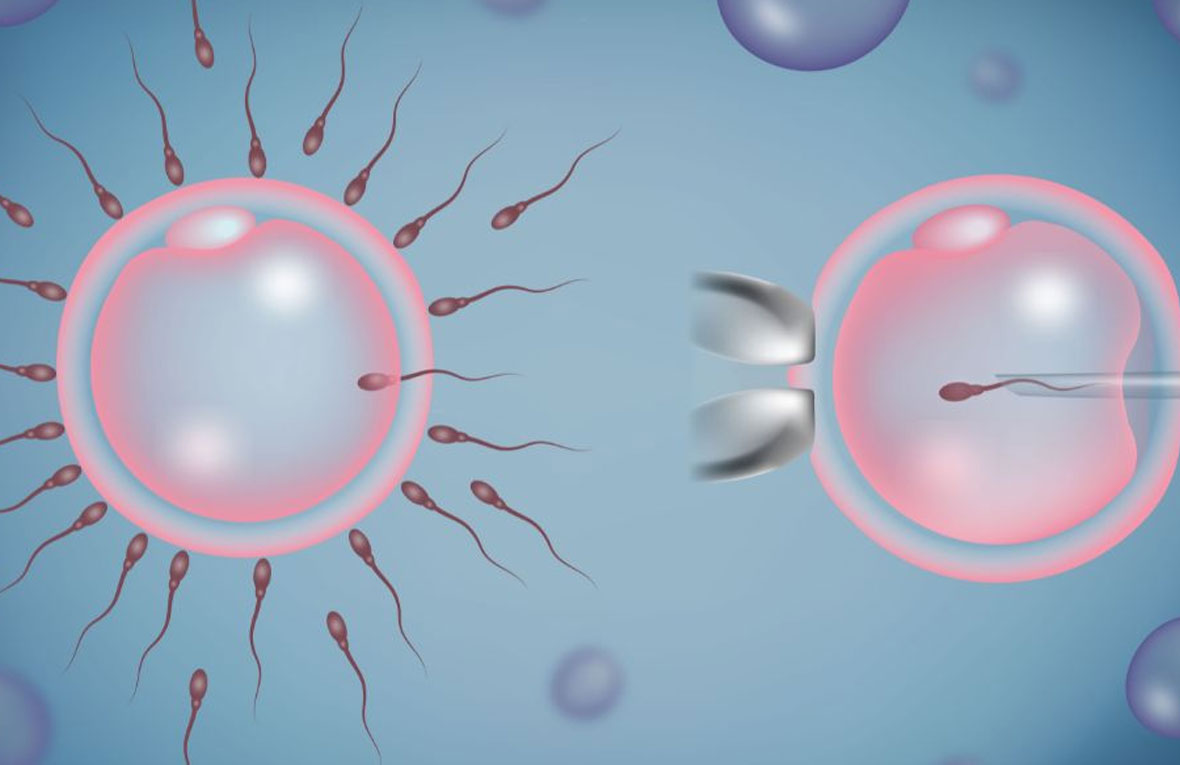
Intracytoplasmic Sperm Injection (ICSI) is an assisted reproductive technique in which a single sperm is directly injected into an egg to assist fertilisation. It is commonly used as part of an IVF treatment cycle when fertilisation may be difficult with conventional IVF.
At Skanda Kumara Fertility & Women’s Health Care, Thiruvarur, ICSI may be considered based on the couple’s fertility assessment, sperm parameters, previous fertility treatment history, and other clinical factors.
ICSI is generally performed as part of an IVF cycle. The treatment process may include:
The treatment protocol and laboratory procedures may vary depending on individual fertility factors and the treatment plan.
ICSI may be considered in situations such as:
A fertility specialist can evaluate both partners and recommend the most appropriate fertilisation method based on their individual circumstances.
ICSI can be particularly useful when male fertility factors may make conventional fertilisation more difficult. In selected cases, sperm may be obtained through procedures such as TESA or PESA and subsequently used for ICSI.
The decision to use ICSI depends on the individual fertility assessment and the circumstances of the treatment cycle.
ICSI, or Intracytoplasmic Sperm Injection, is an assisted reproductive technique in which a single sperm is directly injected into an egg to assist fertilisation. It is commonly performed as part of an IVF cycle.
In conventional IVF, eggs and sperm are placed together in the laboratory and fertilisation occurs without directly injecting a sperm into the egg. In ICSI, a single sperm is injected directly into an egg to assist fertilisation.
ICSI may be considered for certain male-factor fertility problems, previous fertilisation failure, use of surgically retrieved sperm, and other situations where the fertility specialist believes ICSI may be appropriate.
IVF is not automatically suitable for every individual or couple. A fertility assessment, medical history, investigations, and previous treatment experience are considered before recommending an appropriate treatment approach.
ICSI may be considered in some cases of very low sperm count. Depending on the circumstances, sperm retrieval procedures may also be considered when sperm are not available in the ejaculate.
Yes. In selected cases, sperm obtained through procedures such as TESA or PESA may be used for ICSI. The appropriate approach depends on the individual fertility assessment.
At Skanda Kumara Fertility Centre, we provide compassionate, personalized fertility care supported by advanced treatments and experienced specialists, helping individuals and couples move confidently toward parenthood.
Contact
LK Tower, Durgalaya Main Road, Opp. Velludaiyar School, Thiruvarur.
Copyrights © 2026 Skanda Kumara Fertility & Women’s Health Centre. Developed by YOGA’S IT Solutions